
What Is Ayahuasca Really?
Clarifying Common Misconceptions and Sharing My Understanding

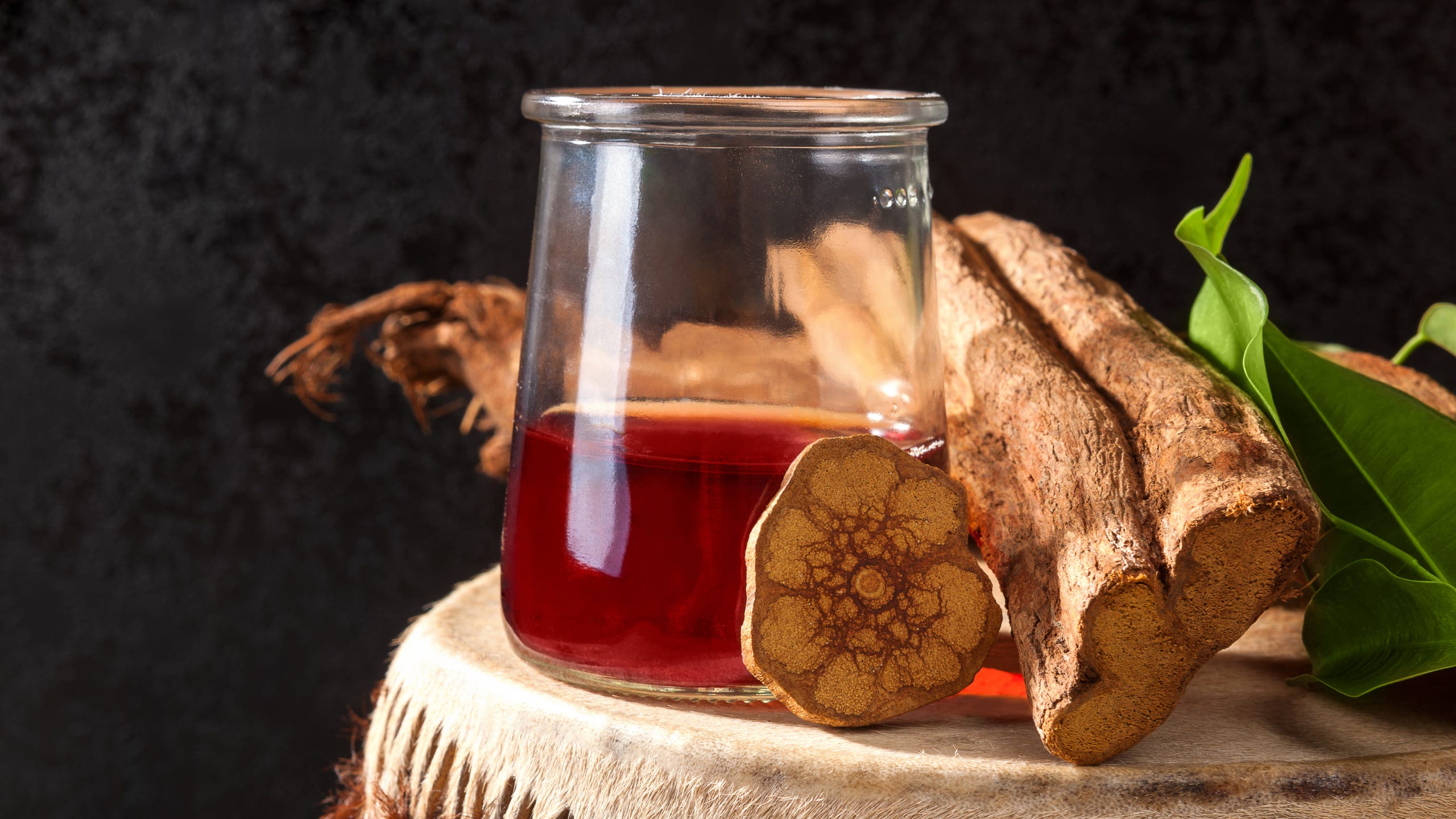
Having recently emerged from an intensive ayahuasca retreat in the Amazon rainforest, I felt called to share a clearer understanding of what ayahuasca is—and to address some of the common misconceptions surrounding this sacred Indigenous medicine.
Ayahuasca is an entheogenic brew made by combining two plants — the ayahuasca vine (Banisteriopsis caapi) and the leaf of the chacruna plant (Psychotria viridis). The leaf contains dimethyltryptamine (DMT), a powerful, naturally occurring psychedelic compound found in many plants and animals. If the chacruna leaf is consumed by itself, however, certain enzymes in the gut break down the DMT and prevent it from being absorbed by the bloodstream.
The ayahuasca vine contains MAO inhibitors (along with many additional medicinal and therapeutic properties), which block the function of those enzymes and allow DMT to be orally active — entering the bloodstream and reaching the brain. Consuming the brew of these two plants together produces a powerful experience that typically lasts four to eight hours.
But this biochemical explanation, while accurate, only scratches the surface of what ayahuasca is.
Ayahuasca as a Living Tradition
For the Indigenous peoples of the Amazon, ayahuasca is not a “psychedelic” in the modern sense. It is a medicine, a teacher, and a sacred sacrament that has been used for hundreds, perhaps thousands, of years within a highly developed cultural, ceremonial, and ethical framework.
Many tribes refer to ayahuasca as Grandmother or Mother, not as a metaphor, but as a recognition of its intelligence and authority. It is approached with great humility, reverence, and preparation. It is not taken casually, recreationally, or for entertainment. Traditionally, there are strict diets, sexual abstinence, prayer, and periods of isolation before and after ceremonies. The medicine is held within lineage, apprenticeship, and responsibility.
Within these cultures, ayahuasca has been used to heal physical illness, clear parasites, resolve emotional trauma, diagnose energetic imbalances, and receive knowledge about other plants in the jungle. Many shamans say that ayahuasca is how they learned which plants treat which conditions—through direct, experiential communication rather than analytical study. In this way, ayahuasca has not only served as a powerful healing medicine, but has also been directly tied to the survival of Amazonian peoples, providing essential knowledge for living in one of the most demanding environments on Earth.
It is also a powerful antiparasitic, something that was essential in rainforest environments where parasitic infection was common. But even here, the physical cleansing was never separated from emotional, psychological, and spiritual purification.
The Discipline of Being With What Is
One of the most misunderstood aspects of ayahuasca is the emphasis on visions.
Many people aim to have big visions and meaningful experiences when they sit with ayahuasca, and while visions do occur (and can be quite profound) the Indigenous understanding is clear: the visions are not the point.
The deeper teaching of ayahuasca is learning how to remain present with intensity without reacting, resisting, or grasping. Fear, grief, nausea, discomfort, beauty, love, terror, joy—all can arise in the ayahuasca experience. The medicine teaches you how to stay present.
In this sense, ayahuasca is less about seeing something new and more about learning how to be with reality as it is, no matter what is, without the usual defenses of the ego. This capacity—to remain open, present, and non-reactive in the face of intensity—is profoundly healing.
Through this, one also begins to let go of all the conditioned defense mechanisms that the ego has created to shield one from the intensity of life. As these conditioned patterns are released, there is a great liberation of energy that can be profoundly healing.
It reminds me of a quote by Rumi: “Your task is not to seek for love, but merely to seek and find all the barriers within yourself that you have built against it.” We all carry countless inner barriers—defenses formed through fear, pain, and conditioning—that limit our capacity to meet life with an open heart. Through ayahuasca, and through the discipline of learning to be with what is, no matter what arises, the heart gradually expands its capacity to hold experience. In this openness, those inner barriers begin to soften and fall away. Words can hardly express how liberating it is to be in direct contact with life—present, aware, and embodied—rather than unconsciously driven by conditioned habits and emotional reactivity.
The Indigenous Dream Language
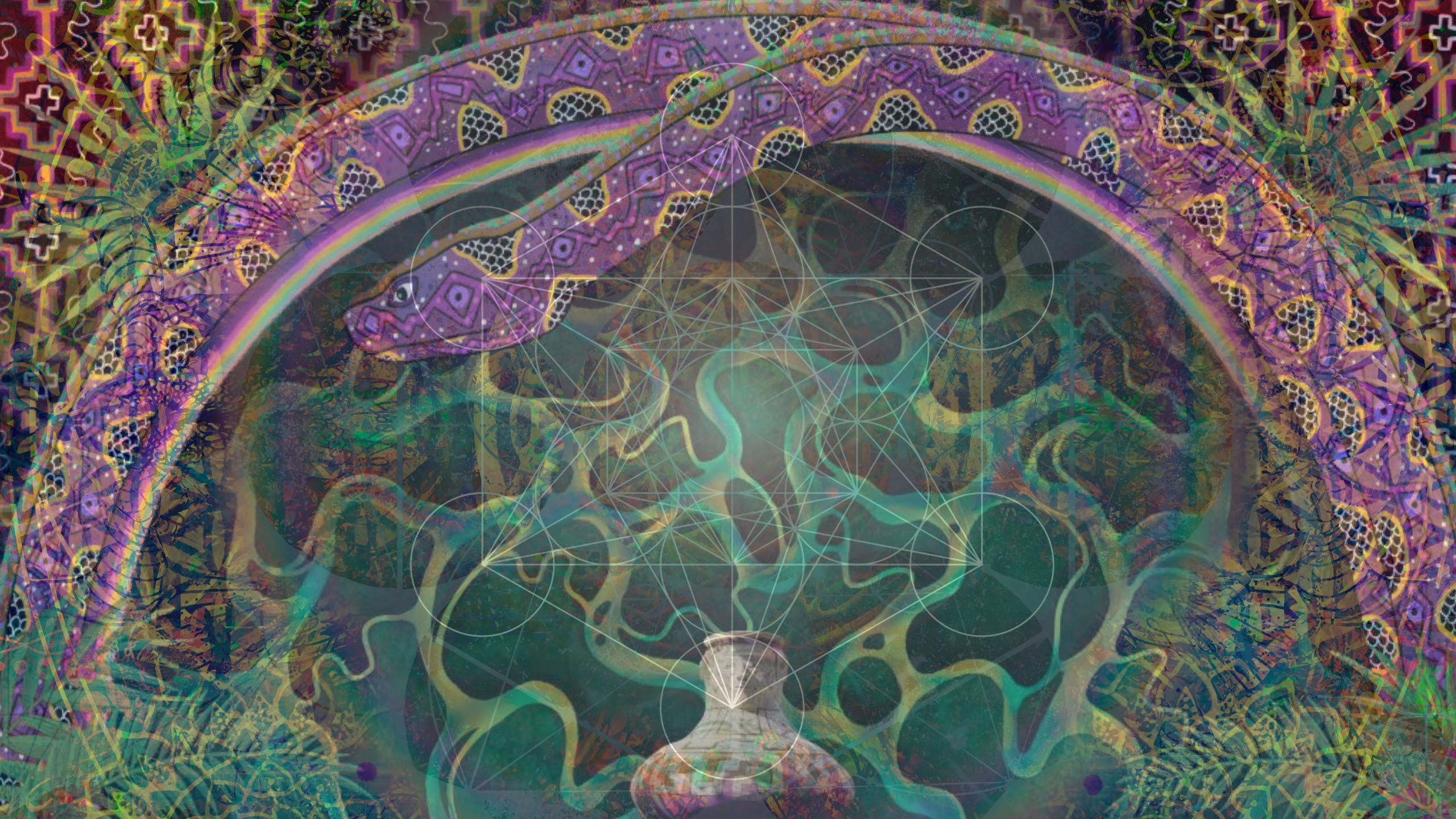
Another aspect of the ayahuasca experience that is often overlooked is the way visions are interpreted by Indigenous Amazonian peoples. Many Indigenous traditions work with what could be called a symbolic or dream-based language. Within this way of knowing, visions are not taken literally, nor are they treated as fixed truths or predictions about the future. Instead, they are understood as meaningful expressions arising from deeper layers of the psyche, the body, and the spirit.
Animals such as jaguars or snakes, experiences of death or dismemberment, journeys into darkness, encounters with light, ancestors, or vast landscapes—all of these are read symbolically. A jaguar is not simply a jaguar, nor is death necessarily about physical death. These images communicate through metaphor, emotion, sensation, and resonance rather than through linear logic. Their meaning unfolds through reflection, relationship, and lived experience over time.
In this worldview, the medicine speaks in the same way dreams do. What matters is not what you saw, but how you were with it, what it revealed about your inner world, and how it changes the way you relate to life afterward. The same vision can carry very different meanings for different people, or even for the same person at different times in their life.
This stands in contrast to how ayahuasca is often approached in modern contexts, where visions are frequently interpreted at face value or taken as literal revelations. Without an understanding of symbolic language, people can become confused, overwhelmed, or attached to dramatic imagery, mistaking the surface content of the experience for its deeper teaching.
Indigenous traditions emphasize discernment, patience, and humility in working with visions. The imagery is not the destination—it is an invitation. An invitation to listen more deeply, to feel more honestly, and to allow the medicine to reveal patterns, wounds, and truths that lie beneath ordinary awareness.
When approached this way, visions become less about spectacle and more about communication—a dialogue with the unconscious, with nature, and with life itself.
Healing at the Root
Many Amazonian traditions hold that illness begins in the mind and emotions—through fear, unresolved trauma, disconnection, or imbalance. By bringing these layers into awareness and teaching a new way of relating to them, ayahuasca works at the root rather than the symptom.
This applies not only to psychological suffering, but to spiritual suffering as well—the deep sense of separation, meaninglessness, or loss of connection that underlies much of modern life.
When held properly, ayahuasca can open a space of profound remembrance: of our belonging, our interconnectedness, and our innate capacity for healing and love.
Ayahuasca in the Modern World
In recent decades, Western science has begun to study ayahuasca more seriously. Research suggests potential benefits for conditions such as depression, PTSD, addiction, anxiety, and certain neurological and inflammatory conditions. Studies also show changes in brain networks associated with rigid thinking and self-referential rumination.
One of the most discussed findings is ayahuasca’s effect on the default mode network (DMN)—the network of brain regions associated with the sense of self (ego), narrative identity, and habitual thought patterns. When this network relaxes, people often report a sense of expanded awareness, emotional release, insight, and connection—to life, to others, to something greater than themselves.
This relaxation of rigid identity structures can allow access to deeply healing states of love, forgiveness, meaning, and spiritual connection—experiencing what many people describe as God, Source, Truth, or simply Love itself.
However, as ayahuasca has spread globally, much of the cultural container has been stripped away.
There is often an overemphasis on visions, peak experiences, and dramatic storytelling. Symbolic imagery is taken literally. The discipline of preparation, humility, and integration is minimized. In some cases, ayahuasca is treated as a shortcut, a spiritual “hack,” or even as a guarantee of awakening.
The Indigenous perspective is clear: the medicine does not heal you by itself. It reveals what needs to be healed—and how you relate to what arises ultimately determines the outcome.
Additionally, ayahuasca has increasingly become part of a global tourism economy. While this has brought visibility and access, it has also led to serious challenges. Many people now serve medicine without proper training, lineage, or understanding of the psychological, energetic, and ethical responsibilities involved. Inexperienced or ungrounded facilitators can cause harm—not always intentionally, but through a lack of skill in holding space, navigating difficult experiences, or recognizing when someone is in distress.
Unfortunately, there have also been documented cases of abuse, exploitation, and misconduct within ayahuasca spaces. These realities do not diminish the medicine itself, but they do underscore the importance of discernment. Ayahuasca is powerful, and power without maturity, integrity, and accountability can be dangerous.
For this reason, it is essential to approach the medicine with care and to sit with facilitators who are well-trained, ethically grounded, and deeply respectful of the tradition. Proper screening, preparation, ceremonial structure, and post-ceremony integration are not optional—they are part of what makes the work safe and genuinely healing.
Speaking personally, I have been fortunate to sit in a container that I trust and respect, and I can recommend Paititi Institute as a place that approaches the medicine with seriousness, humility, respect for the indigenous lineages, and care for the well-being of those who come to work with it.
The Phases of the Ayahuasca Experience
I have now sat with ayahuasca twelve times—seven of those on this current journey in Peru. Rather than speak abstractly (I’ll share more of my personal experiences later), I want to share more about how the medicine works on the body, the mind, and the heart; what it teaches beyond visions; and how its real power unfolds not during the ceremony, but in how we live afterward.
That is where the story becomes personal—and where the real work begins.
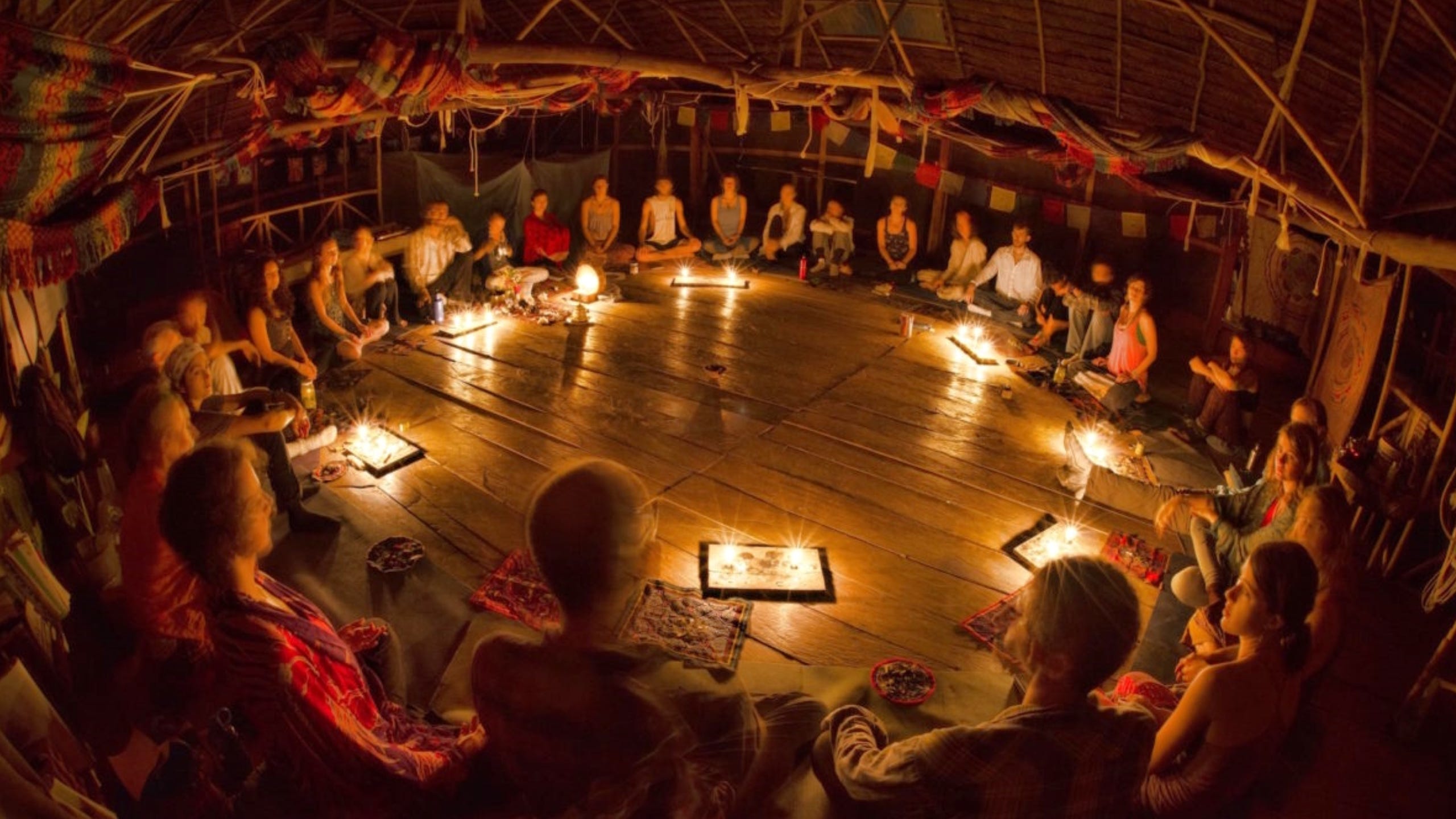
While every experience is unique, I have found that there is often a recognizable process to how the ceremony unfolds. After drinking the medicine, the effects typically begin within 30 to 60 minutes, though in some cases it can take much longer—occasionally hours—before anything is felt.
The first phase is often the onset, when the medicine begins to move through the body and perception starts to shift. Sensations may intensify, emotions may surface, and visions may begin to appear. For many people, this leads into a period of peak intensity, when the experience feels strongest and most immersive.
It is often during this phase that purification occurs. This can take the form of nausea, vomiting, diarrhea, shaking, crying, sweating, or emotional release — commonly referred to as “purging.” While this part of the experience is frequently feared—especially by those new to the medicine—it is traditionally understood as a cleansing process, not something gone wrong.
In my earlier ceremonies, I resisted and feared this phase. Over time, I’ve come to see it as an essential part of the work: a clearing of physical, emotional, and energetic blockages that allows something new to emerge (I’ve also found that it feels very relieving to purge in the middle of an intense experience).
Following purification, many people enter a phase of clarity and receptivity. The body often feels lighter, the nausea subsides, and the mind becomes more spacious and centered. My friend and facilitator Roman often describes this as “having to go through the purification in order to receive the blessing.” In this state, insights can arise with remarkable clarity, accompanied by feelings of peace, love, gratitude, or deep understanding.
From there, the experience usually begins to gradually soften and fade. The intensity diminishes, visions become less vivid, and awareness slowly returns to a more ordinary state—though often with a lingering sense of openness and sensitivity. Even after the ceremony formally ends, the effects frequently continue into the night and can be felt well into the next day, sometimes longer.
It’s worth noting that purification does not always follow a fixed sequence. While it commonly occurs earlier in the ceremony, it can arise at any point, even later on, as the medicine continues to work.
During the experience itself, the healing can feel profound and unmistakable. Insights may appear obvious, life patterns suddenly clear, and long-held wounds momentarily resolved. And yet, as the days pass, the familiar sense of self begins to reassemble. The ego, habits, and conditioning gradually return. Something may have shifted, something may have been cleansed—but the feeling itself fades.
This is where ayahuasca reveals its deeper truth: the ceremony shows what is possible, but it does not live your life for you. The medicine offers insight, clarity, and opening. The real work is to embody those insights when the visions are gone, when the emotions settle, and when daily life resumes.
In this way, ayahuasca is not a substitute for inner work, and it is not the end of the path—it is an invitation. What we do with that invitation determines whether the experience becomes a passing peak or a lasting transformation.
So, What Is Ayahuasca Really?
Ayahuasca is not a shortcut to awakening, not a guaranteed healing, and not a visionary spectacle meant to be collected or displayed. At its essence, it is a powerful traditional medicine—one that works by revealing what is already present within us and teaching us how to relate to it more honestly.
Within its original Indigenous context, ayahuasca is held as a disciplined practice rooted in humility, preparation, and responsibility. It is used not to escape reality, but to meet it more fully. The visions, while sometimes striking, are not the point. They are a language—symbolic, psychological, and spiritual—through which deeper truths are communicated. What matters most is not what is seen, but how one learns to remain present with whatever arises.
Many modern misconceptions reduce ayahuasca to peak experiences, dramatic imagery, or a spiritual “hack.” When taken out of its cultural and ethical container, the medicine can be misunderstood, misused, or even cause harm.
While ayahuasca has intrinsic medicinal and therapeutic effects of its own, its primary function is to reveal what needs healing, and the depth and durability of that healing depend greatly on the care, integrity, and awareness with which the process is held—before, during, and especially after the ceremony.
At its best, ayahuasca opens a space of clarity, emotional release, and deep remembrance. It can loosen rigid patterns of identity, soften the heart, and reconnect us to life, to meaning, and to love. But its true power is not found in the ceremony itself—it is found in how we integrate what is revealed and how we live differently as a result.
To approach ayahuasca rightly is to approach it with respect: for the medicine, for the Indigenous lineages that have safeguarded it, and for the seriousness of the inner work it invites. When held in this way, ayahuasca is not something to chase, consume, or conquer. It is a profound teacher—one that awakens our potential, and asks for patience, humility, and a willingness to walk the path long after the visions fade.
That, in my experience, is what ayahuasca really is.